What is a basic comprehension test?
A basic comprehension test is a foundation-level verbal reasoning test that
checks how well you understand written English. You are given a passage of
information and asked to read it, weigh a set of possible answers and choose
the most suitable one.
It sits at secondary school level, around age sixteen, and the questions draw
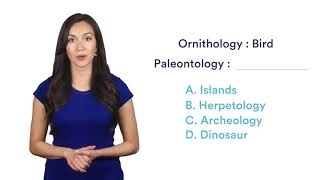
on everyday language skills: vocabulary, spelling, word association, idioms
and metaphors, and sometimes sentence structure and grammar. The aim is to
confirm you can take meaning from text accurately, which almost every job relies on.
Like the numeracy version, it is timed. You typically get between 45 seconds
and two minutes per question, so reading efficiently matters as much as
reading correctly.
What skills do basic comprehension tests assess?
Basic comprehension tests assess your ability to understand and interpret
written information, broken down into a handful of distinct skills. Knowing
which one a question is testing helps you answer it.
- Reading comprehension: finding the main idea, the supporting detail and
anything the passage implies rather than states.
- Vocabulary: understanding words in context, including synonyms, antonyms
and clues from the surrounding text.
- Inference: drawing a logical conclusion from what the passage says,
without adding your own assumptions.
- Critical thinking: spotting bias, inconsistency or a flaw in an argument.
- Summarising: capturing the main point of a passage concisely and accurately.
- Contextual understanding: seeing how a word or sentence works within the
passage as a whole.
These are the same skills good written communication relies on, which is why
employers across many roles use the test.
What does a basic comprehension test look like?
A basic comprehension test gives you a passage followed by questions with
multiple-choice answers, and asks you to answer from the passage alone.
Foundation comprehension also appears inside well-known admissions and
psychometric tests, such as the GRE and the ieGAT, so the format is widely used.
The English required is secondary school level. Within that, questions may ask
you to:
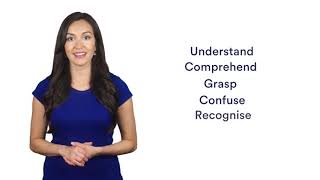
- Choose the word closest or opposite in meaning to one in the text.
- Identify the main idea or the writer’s intention.
- Decide whether a statement is supported by the passage.
- Complete a sentence so that it reads correctly.
- Spot the correct spelling, or the grammatically correct option.
Questions on idioms, metaphors and word association also appear, testing whether
you understand language that is not entirely literal.
How do you answer reading comprehension questions accurately?
Answer from the passage, not from what you already know, because outside
knowledge is the most common way to talk yourself into a wrong option. Every
correct answer can be backed up by something the text actually says.
A method that holds up under time pressure:
- Read the questions first. Knowing what you are looking for lets you skim
for the relevant part rather than reading every word twice.
- Read the passage carefully, at least once. For a tricky question, reread
only the sentence or two that matters.
- Check each option against the text. If you cannot point to the words that
support it, it is probably the wrong choice.
- Eliminate before you choose. Rule out the options you are sure are wrong,
then decide between what is left. This guards against the nearly-right answer
designed to catch you.
How do you manage your time?
Scan the whole test before you start, so you know how many passages and
questions you face and can plan your time across them. Comprehension tests are
timed, and spending too long on one passage is what leaves people with unanswered
questions at the end.
Two habits help most:
- Budget per passage, not just per question. A long passage with several
questions deserves a proportionate slice of time, no more.
- Do not get stuck. If one question resists, mark it, move on, and come back
if time allows. The marks you leave behind are worth more than the one you are
wrestling with.
How are basic comprehension tests scored?
Most basic comprehension tests are scored like a school English test: your
result is the number of questions answered correctly. Some employers compare
that against other applicants rather than a fixed pass mark, so the bar reflects
who else applied.
Check for negative marking. It is not usual, but some tests deduct a mark for a
wrong answer, which affects whether a rushed guess is worth taking. The
instructions will say, so read them before you begin.
Speed and accuracy count together. Because these tests are built so that few
candidates finish comfortably, blank answers cost you ground against people who
attempted them. Unless there is negative marking, a considered guess beats leaving
a question empty.
Which employers use basic comprehension tests?
Basic comprehension tests are used wherever a role depends on reading and
understanding written information accurately, which covers a wide range of
operational, customer service, administration, help desk and commercial jobs.
They are one of the most widespread early-stage selection tools.
Employers favour them because clear comprehension underpins so much day-to-day
work: following written instructions, understanding policies, and responding to
customers correctly. Foundation comprehension also forms part of broader
psychometric and admissions tests, so the same skills carry across to graduate
and professional assessments.
As with other aptitude tests, the exact format depends on the publisher the
employer uses, so find out which one and practise that style where you can.
What is the best way to prepare?
Practise under the real time limit, because untimed reading builds accuracy but
not the pace the test measures. Most people who struggle do so on speed, and that
is exactly what timed practice fixes.
A preparation sequence that works:
- Take one test untimed first, reading every worked answer, to see how the
questions are built and where the traps sit.
- Then work under the clock, at around one minute a question, practising the
read-the-questions-first method until it is automatic.
- Read widely in between. Regular reading of articles and reports quietly
builds the vocabulary and speed the test rewards.
- Review your errors, checking whether you misread the passage or added
outside knowledge, since those need different fixes.
Practise somewhere quiet, close to real conditions, so the silence and the clock
feel familiar on the day.